





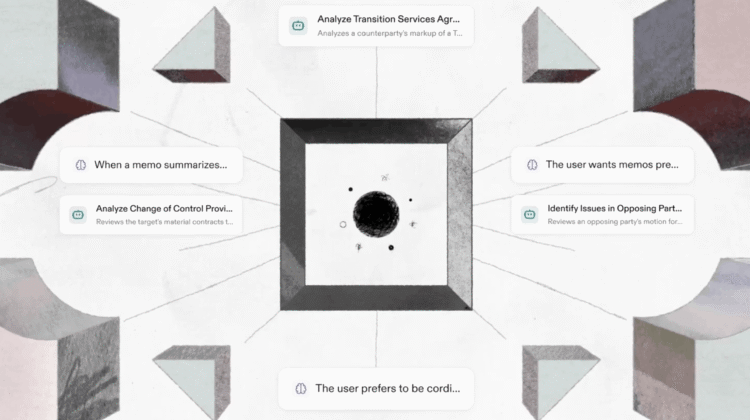
Legal AI company Harvey has launched Harvey II, a redesigned version of its platform intended to help AI agents retain the context surrounding legal work instead of starting from scratch with each prompt.
At the centre of the new platform are Spaces built around individual matters or projects. Each Space can contain the relevant documents, parties, tasks, permissions and work history, giving agents access to the context they need before beginning an assignment.
Tasks can be assigned to either lawyers or agents and passed between them as work progresses. For law firms, Harvey says permissions and ethical walls can be synchronized from existing systems, while usage and costs remain connected to the appropriate matter. Client data does not move between Spaces.
Harvey II also introduces Memory, which learns how individual users structure summaries, handle citations and write. Preferences can be provided directly or inferred from edits and corrections, then carried across Harvey, Microsoft Word and Outlook.
Users can inspect what the platform remembers, modify the information or disable Memory entirely. Harvey says stored memories are not used to train AI models.
The launch also includes Harvey Tenet, the company’s first model post-trained end to end for legal reasoning. Harvey claims Tenet performs at a “frontier level” on prominent legal benchmarks while operating at a cost intended to make continuous agent use more practical. The company also sees Tenet as the foundation for future models tailored to the work and standards of individual legal organizations.
The release reflects a broader shift in legal AI from prompt-based assistants toward systems organized around complete matters and workflows. Rather than asking lawyers to repeatedly upload documents and restate instructions, Harvey II is designed to preserve the history, preferences and access controls surrounding the work.
The development will be closely watched in Canada, where Torys began deploying Harvey firmwide earlier this year. For Canadian firms and legal departments assessing the platform, the central question will be whether persistent context can improve the usefulness of AI while maintaining the confidentiality, oversight and matter-level controls legal work requires.