





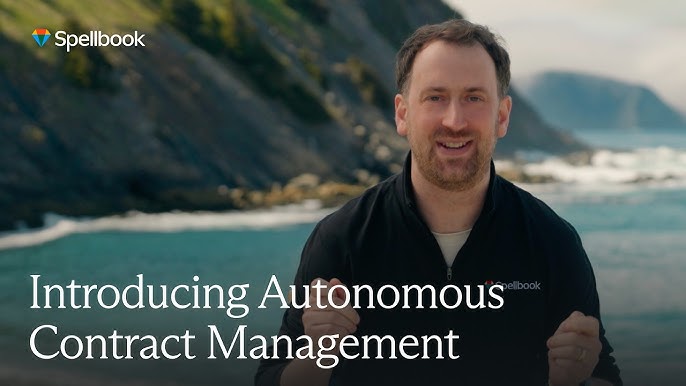
Toronto-based legal AI company Spellbook has launched Autonomous Contract Management, a new system designed to manage contracts across the full lifecycle, from intake and review to storage, search, renewal tracking, and post-signature risk monitoring.
The company says the launch marks a shift from traditional contract lifecycle management tools toward AI systems that can actively perform contract work, rather than simply store documents or route approvals.
Spellbook ACM is being positioned as an end-to-end contract management system for legal teams that want to reduce manual work around triage, first-pass review, redlining, approvals, and renewal tracking. According to the company, the platform can pull contracts from email, Slack, Salesforce, and other places where agreements begin, then review and redline them against a team’s standards before a lawyer opens the file.
Each agreement is routed to the appropriate owner or pipeline, with a diagnostic outlining where the contract diverges from internal standards, where the risk sits, and what action should be taken next. Routine agreements that meet a team’s standards can be prepared for approval, while higher-risk or more complex matters are flagged for closer review.
“CLMs were the first attempt at solving a real problem, but they were built before AI could do the actual work,” said Scott Stevenson, co-founder and CEO of Spellbook. “Most teams ended up with an expensive filing cabinet. Meanwhile, lawyers still spend their days on triage, first-pass review, and chasing signatures. None of that needs a lawyer.”
Spellbook says ACM is built around three core workflows: intake, review, and insight.
The intake workflow focuses on bringing new contracts into the system automatically, reviewing them against playbooks, and assigning them to the right team member. The review workflow centralizes active deals in one workspace, allowing lawyers to track what needs attention, compare versions, and see the full negotiation history. The insight workflow handles the post-signature stage by storing agreements, making them searchable, surfacing answers with citations back to source documents, and flagging renewals or emerging risks over time.
The launch comes as legal departments and law firms continue to look for ways to bring AI into contract work beyond drafting assistance. Spellbook argues that business activity has accelerated while contract processes have remained largely stuck in email, Word documents, shared folders, and manual review queues.
The company also points to its own recent research on SEC-filed contracts, which found that contract issue rates have not meaningfully improved in two decades.
Spellbook, which says it is used by more than 4,500 legal teams across 80 countries, has become one of Canada’s most closely watched legal AI companies. The company previously announced a USD $40 million debt financing from RBCx to support strategic acquisitions in the legal AI market, following a USD $50 million Series B round that valued the company at $350 million.
Spellbook ACM is rolling out to select teams now, with a waitlist open for broader access.