





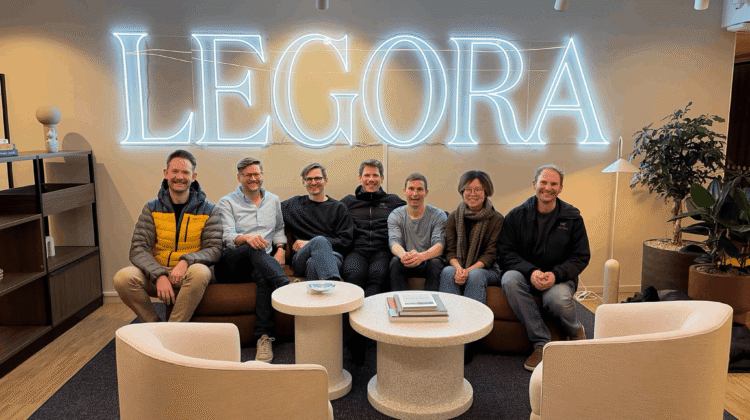
Vancouver-based legaltech startup Walter has been acquired by European legal AI platform Legora, marking a notable cross-border deal in the rapidly evolving legal AI sector.
The acquisition comes just days after Legora raised USD $550 million in a Series D funding round led by Accel, nearly doubling the company’s valuation to USD $5.6 billion.
Founded by Ryan Wilson alongside co-founders Jon Conlin and Karl Campbell, Walter set out to build AI tools that fit naturally into legal workflows. The company focused on reducing routine, time-intensive tasks so lawyers could concentrate on higher-value work.
“For the last few years, we’ve tried to do one stubborn thing: build legal AI that works the way lawyers actually work,” Wilson wrote in a LinkedIn post. “Not the way it gets described by marketing departments and Twitter threads.”
Walter became known for developing agentic legal technology designed to achieve outcomes rather than simply assist with tasks — a distinction that increasingly defines next-generation legal AI platforms.
A key part of Walter’s development came through close collaboration with major Canadian law firms, including Fasken and McCarthy Tétrault, giving Legora with immediate entry into the Canadian market.
Through joint innovation programs, the firms worked directly with Walter’s team to test and refine emerging AI applications in live legal environments.
Wilson credited Constantinos Ragas at Fasken and Matthew Peters at McCarthy Tétrault for supporting the company in its earliest stages, when its product was still in prototype form.
The acquisition brings Walter’s team into Legora’s global operation, headquartered in Stockholm. Wilson said the two companies aligned quickly around a shared vision: building end-to-end AI agents capable of handling full legal matters.
Engineers from Walter have already begun integrating with Legora’s team, with in-person collaboration underway in Sweden.
The deal reflects continued momentum in legal AI consolidation, as specialized startups join larger platforms to scale product development and global reach. It also underscores growing demand from enterprise legal teams for AI systems that move beyond document review and into matter-level execution.